Entertainment
October
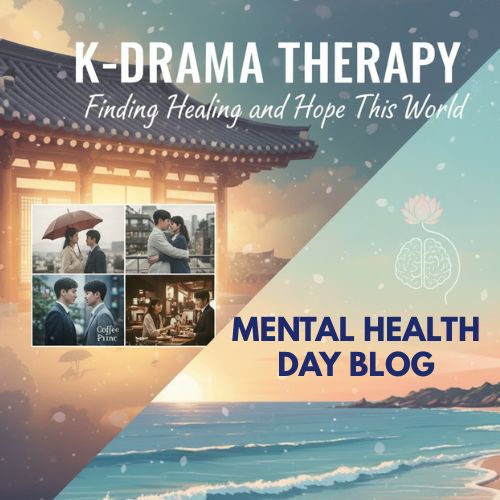
10th — World Mental Health Day.
A Day that reminds us to pause, check in with ourselves, and remember:
mental health is as real and as important as physical health.
Every year, the conversation grows stronger — about breaking stigma, seeking help, and supporting each other. But sometimes, healing doesn’t come only from therapy or medication. Sometimes, it starts from an unexpected place — like the quiet comfort of your favourite K-Drama playing on a rainy night.

Now, you might be thinking — “K-Dramas? Aren’t they all
just love triangles, chaebols, and dramatic slow-motion scenes?”
Well, yes… and no.
Behind the swoon-worthy moments and catchy OSTs, K-Dramas
have evolved into powerful reflections of mental health, emotional resilience,
and healing. They tell the stories we often struggle to put into words — of
loneliness, trauma, grief, burnout, and rediscovering self-worth.
Let’s take a moment to explore how these stories have
quietly become a form of therapy for millions around the world.

When life feels heavy and isolating, some shows gently
remind us we’re not alone.
My Mister — A quiet masterpiece about two souls weighed down by life, finding solace in shared silence.
My Liberation Notes — For anyone who’s ever felt stuck in routine and craved liberation.
If You Wish Upon Me — A heartwarming story about granting final
wishes and rediscovering purpose amid pain.
These dramas show that healing doesn’t always mean grand
gestures. Sometimes, it’s in the smallest human connections.

Trauma doesn’t disappear — it transforms, and these dramas
explore that transformation beautifully.
It’s Okay to Not Be Okay — Where a caregiver, a writer, and a brother all learn that it’s okay to be broken, and it’s okay to heal together.
The Glory — A dark revenge story that exposes the lasting scars of abuse and the strength it takes to reclaim your life.
Just Between Lovers — Two survivors of tragedy slowly teach each
other how to live again.
Each of these stories reminds us that healing is never
linear — it’s messy, painful, and deeply human.
3. Mental Illness & Neurodiversity

K-Dramas have also begun to shine a light on conditions that
are often misunderstood or hidden in silence.
Daily Dose of Sunshine — Set in a psychiatric ward, it’s an eye-opening look at empathy and the courage it takes to care for others (and yourself).
It’s Okay, That’s Love — A pioneering show that portrayed schizophrenia, OCD, and anxiety without judgment.
Our Blues — A tender collection of stories about depression,
disability, and the quiet strength of ordinary people.
These dramas don’t just show mental illness — they
normalise it, helping audiences replace judgment with understanding.
4. Intergenerational Stress & Family Trauma

In Korean culture — and honestly, in many of ours — family
expectations often shape who we become. However, when love becomes entangled with pressure, guilt, or regret, it leaves deep emotional scars that reverberate across
generations.
Sky Castle — A razor-sharp satire about elite
parents who push their children to academic extremes, showing the crushing cost
of perfectionism and social pressure.
The Good Bad Mother — A deeply emotional story
of a mother who raises her son with rigid discipline, only to later realise the
pain it caused. It’s a moving tale of redemption and second chances.
When Life Gives You Tangerines — Set against
Jeju Island’s tranquil backdrop, this upcoming drama (featuring IU and Park
Bo-gum) explores the quiet wounds and generational longing hidden behind
everyday life. It’s about nostalgia, forgiveness, and learning that healing
sometimes comes from being seen — not fixed.
These stories remind us that family love isn’t always
gentle, but it’s never too late to make peace with the past — or to start
healing in your own way.
5. Grief, Loss & Letting Go

Some shows make us cry not just because they’re
sad, but because they touch something real inside us.
Move to Heaven — A young man and his uncle clean the belongings of the deceased — and uncover stories of love, regret, and closure.
Goblin (Guardian: The Lonely and Great God) — A poetic take on life, death, and the art of saying goodbye.
Thirty-Nine — A heartfelt portrayal of friendship, love, and
facing mortality together.
They teach us that grief isn’t something to “get over.” It’s
something we learn to live with.
6. Burnout & Identity Crisis

Who hasn’t felt lost at some point — questioning if we’re on
the right path?
Doctor Cha / Doctor Slump — For everyone who’s ever needed a do-over, a reminder that it’s okay to pause and start fresh.
Summer Strike — A gentle, healing story about doing “nothing” —
and how that can be everything we need.
Sometimes, the bravest thing we can do is rest.
7. The Power of Healthy Relationships

At the end of the day, we heal through love — not just
romantic love, but friendship, community, and connection.
Hospital Playlist (1 & 2) — Five doctors, one unbreakable bond. Proof that friendship can be life’s best therapy.
Twenty-Five Twenty-One — A nostalgic look at youth, ambition, and
the friendships that hold us together through change.
So… Why
Does This Matter?
Because stories heal.
They give us language for what we feel but can’t say.
They remind us that we’re not alone, no matter how isolated we may feel.
This World Mental Health Day, let a K-Drama remind
you that your story — no matter how messy, painful, or unfinished — is still
worth telling.
Take a cue from It’s Okay to Not Be Okay:
You don’t have to be perfect to deserve love, healing, or happiness.
So maybe tonight, instead of scrolling endlessly, press play
on that drama you’ve been meaning to watch.
Who knows — it might just speak to your heart.
10 October 2025
Visitor : 626



Comments